This post may contain affiliate links. Read our privacy policy.
Easy Cottage Cheese Scones made with simple ingredients for a tasty homemade treat! Make them for brunch with friends and family or any time the craving strikes.
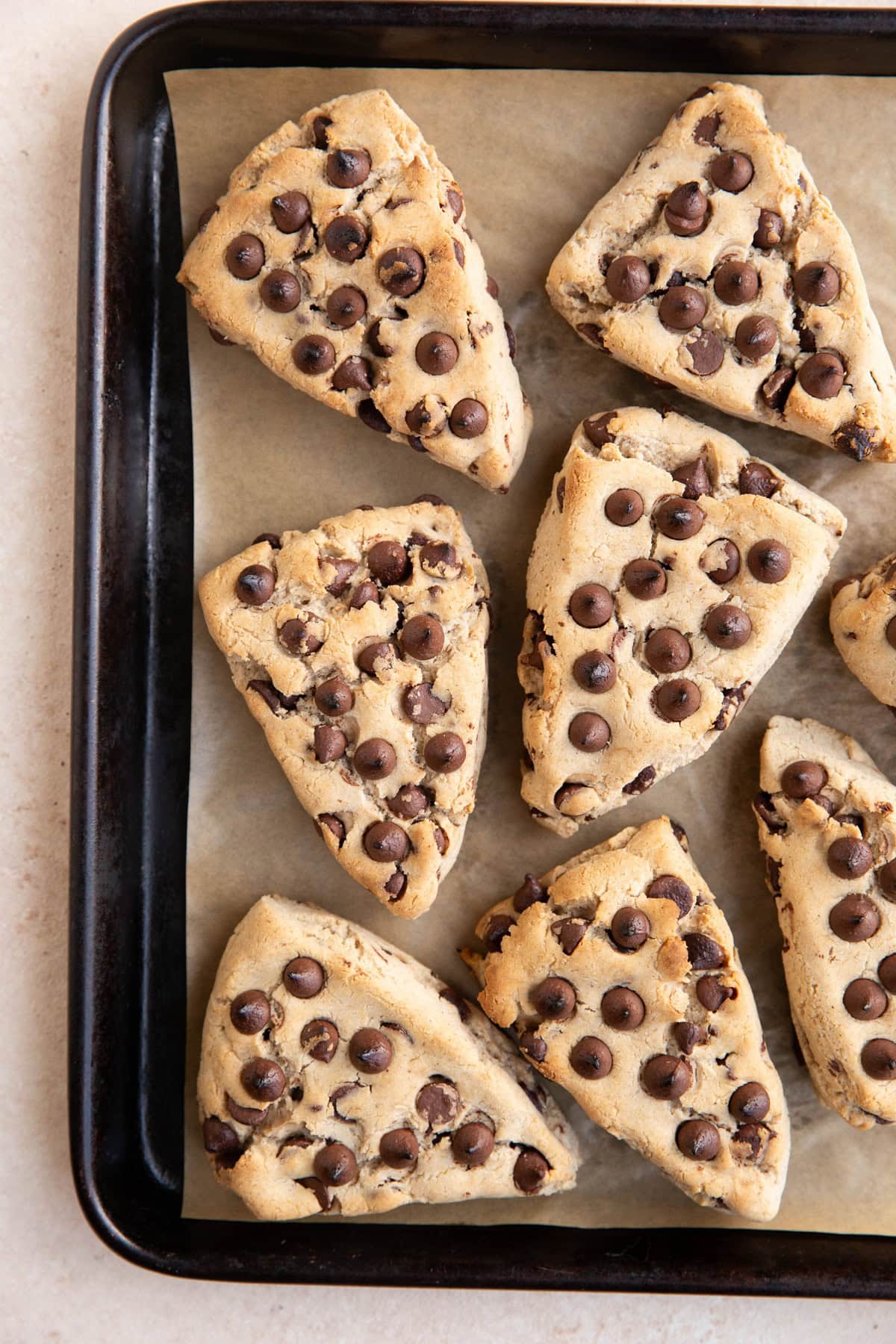
If you’ve tried some of my other cottage cheese creations, such as my Peanut Butter Cottage Cheese Cookies, Cottage Cheese Waffles, or my Cottage Cheese Muffins, I just know you’ll love these cottage cheese scones!
High protein cottage cheese takes the place of butter for a lower calorie higher protein option that still results in fluffy scones with a tender crumb.
They have a perfect crispy on the outside, tender on the inside texture with the perfect level of sweetness. The best part? They are much easier to prepare than traditional scones, because you don’t need to meticulously cut cold butter into flour or wait for the dough to chill.
You can use this as a base recipe for all of your scone adventures, fashioning up a blueberry cottage cheese scone, cherry scones, lemon cottage cheese scones, and much more. I love these chocolate chip scones, but I have also tried and loved numerous other flavors.
The simple ingredients are easy to find at any grocery store! Here is a deep dive on the function of each ingredient and why I selected it.
Ingredients for Cottage Cheese Scones:
Cottage Cheese: Taking the place of butter, cottage cheese serves as the majority of the moisture and also adds a little protein to the scones. I like using 5% milk fat cottage cheese for the richest results, but you can also use low-fat cottage cheese too.
Gluten-Free All-Purpose Flour or Regular All-Purpose Flour: The base of the scones. I use Bob’s Red Mill Gluten-Free All-Purpose Flour to make gluten-free scones, but you can also use regular self-rising flour.
Granulated Sweetener: Pick your favorite granulated sweetener, like regular white sugar, brown sugar, coconut sugar, maple sugar, or sugar-free sweetener (such as monk fruit sweetener or allulose).
Avocado Oil: Because there isn’t a lot of fat in cottage cheese, I like adding some supplemental fat in the form of avocado oil. This ensures the scones have just the right moisture level. Melted olive oil, melted butter or coconut oil work too.
Baking Powder: The leavening agent to help the dough rise to a fluffy consistency.
Ground Cinnamon: I love adding cinnamon to most baked goods to bring a warm flavor for a little nuance. Skip it if you aren’t into cinnamon.
Pure Vanilla Extract: Brings a lovely subtle vanilla undertone.
Your Choice of Additions: I add semisweet chocolate chips to impart little pockets of chocolate goo, but you can pick your choice of fresh fruit, dried fruit, chopped nuts, lemon zest, etc.
Ways to Customize:
- Lemon Poppy Seed: Add 1 tablespoon of lemon zest and 1 tablespoon of poppy seeds for a lemon poppy seed treat.
- Fruit Infusion: Fold 1 cup of fresh blueberries, strawberries, blackberries, chopped cherries, or raspberries to bring a pop of fruity flavor. I’m a big fan of blueberry cottage cheese scones.
- Cranberry Orange: Mix 1 tablespoon of orange zest and ½ cup of dried cranberries into the scone dough for cranberry orange cottage cheese scones.
- Savory Scones: Mix 2/3 cup of grated cheddar cheese (or your favorite grated cheese) and 3 chopped strips of cooked bacon. A little fresh minced garlic or 1 tsp garlic powder is a great addition too.
How to Make Cottage Cheese Scones:
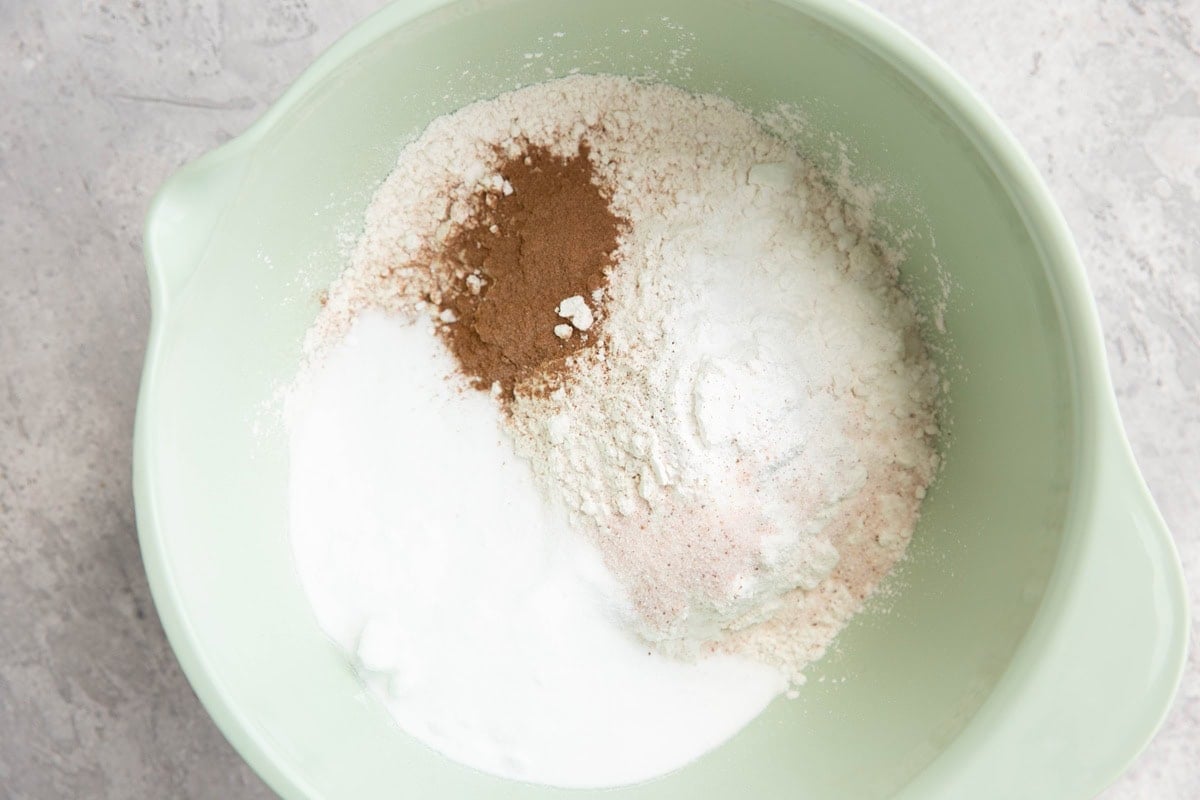
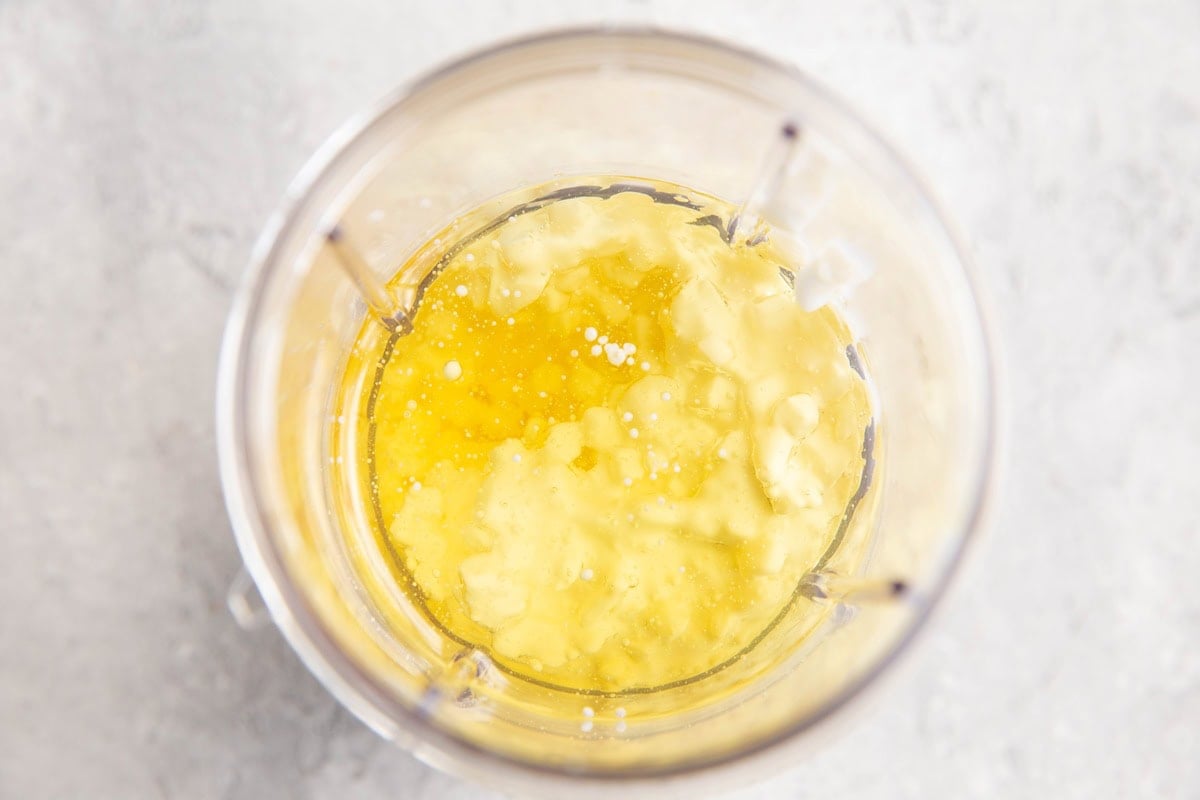
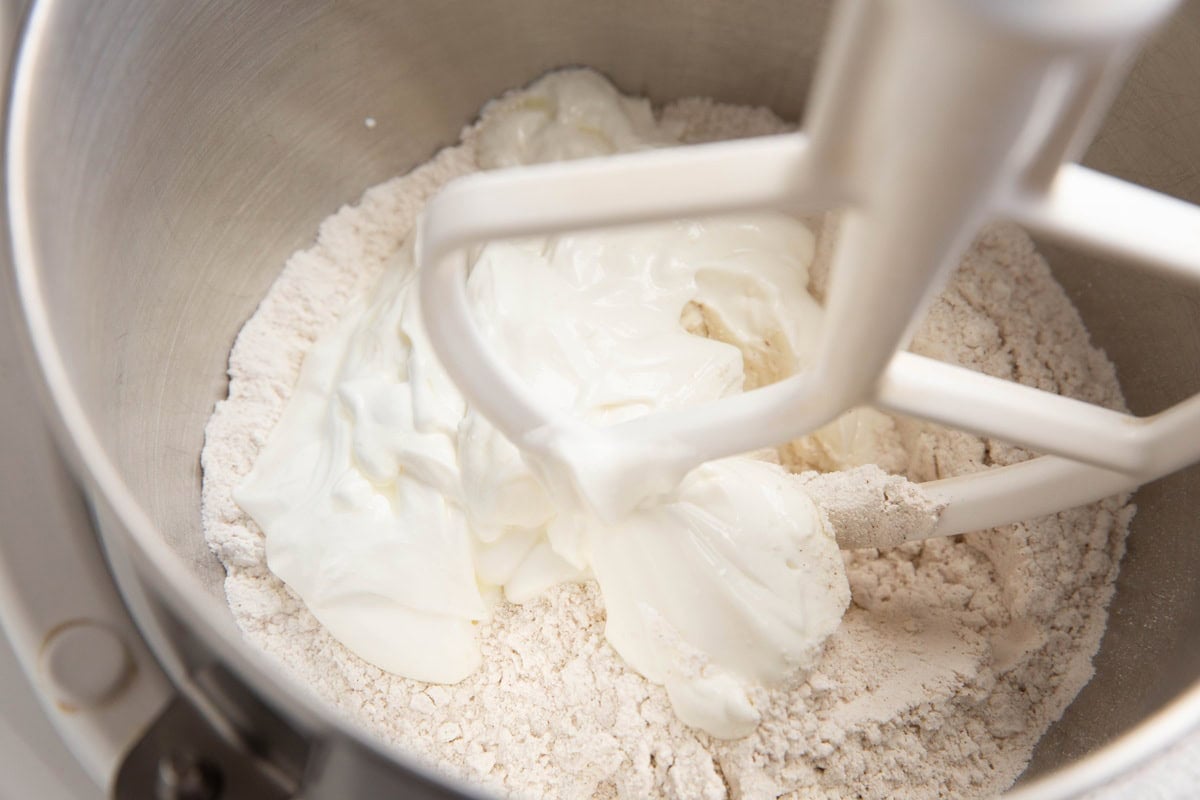


Preheat the oven to 375 degrees Fahrenheit and line a large baking sheet with parchment paper.
- Combine the gluten-free flour, sugar, baking powder, cinnamon, and sea salt in a large bowl and stir well to combine. Transfer the dry mixture to the bowl of a stand mixer fitted with the paddle attachment.
- Blend the cottage cheese, avocado oil, and pure vanilla extract in a blender and blend until the mixture is thick and smooth, resembling the consistency of sour cream.
- Transfer the blended cottage cheese wet mixture to the stand mixer and mix on low speed until the ingredients are combined. Then, increase the speed to medium-high speed and add 2 to 3 tablespoons of milk or water, until a thick dough forms. At first, the mixture will look very dry, but it will come together in a perfect scone dough after adding some liquid and beating thoroughly. Mix in the chocolate chips until combined.
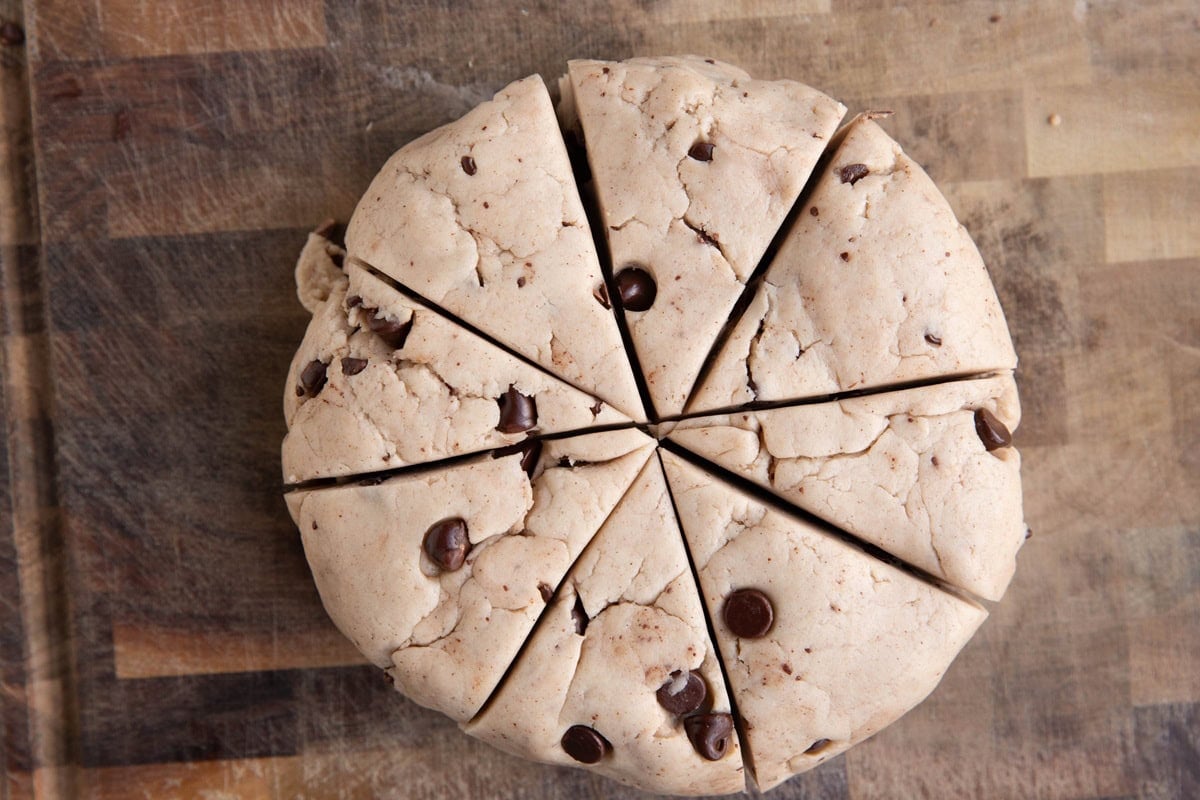
- Form the dough into a large ball, then press it into a disc on the parchment-lined baking sheet. Use a sharp knife to cut the dough into 8 triangular sections.
- Space the triangles of dough over the prepared baking sheet, giving them plenty of space. If you’d like, press extra chocolate chips into the tops of the dough.
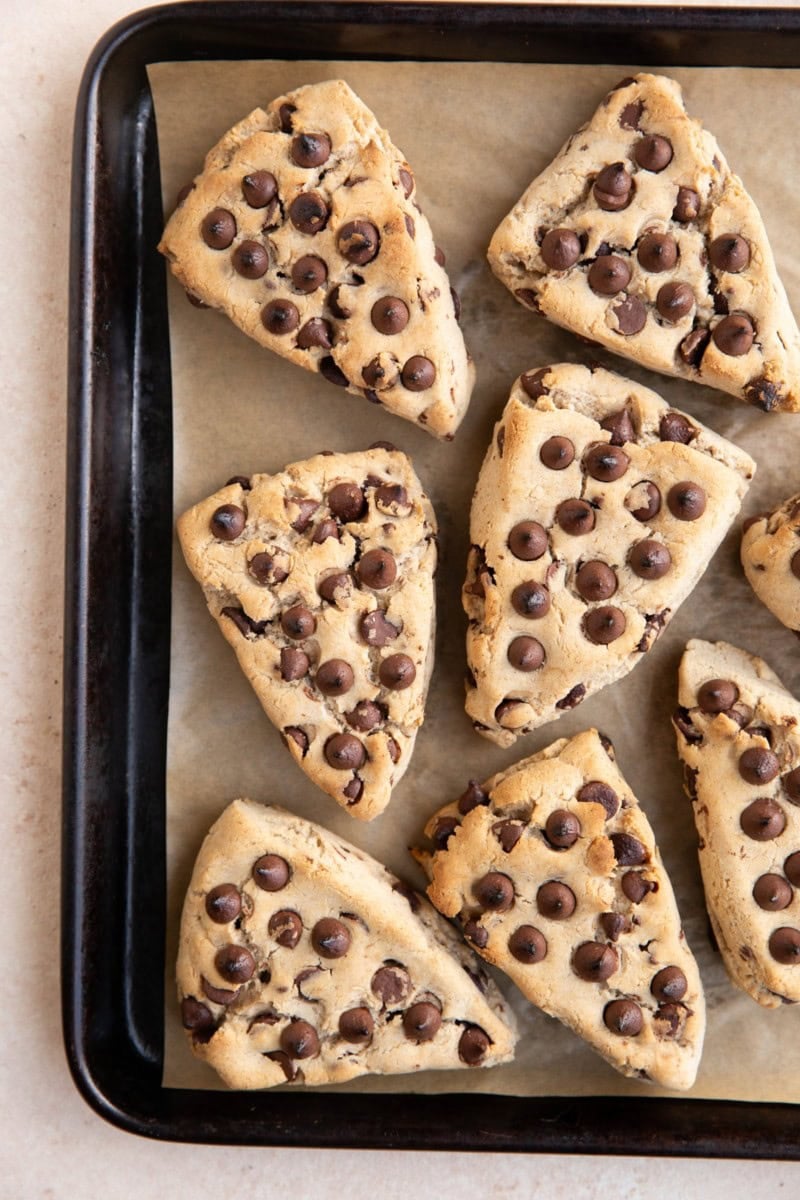
- Bake on the center rack of the preheated oven for 18-22 minutes, or until the scones are golden brown.
Allow the scones to cool for at least 10 minutes before enjoying.
Recipe Tip
If you’d like, you can make an optional glaze by mixing one cup of powdered sugar with 2 tablespoons of milk or water in a small bowl. Until creamy. Drizzle the glaze over the scones and allow it to dry before serving.
Storage Options:
- Room Temperature: Store scones in an airtight container or a zip lock bag on the counter for up to 2 days.
- Refrigerator: Store in the refrigerator for up to 1 week.
- Freezer: For longer term storage, freeze scones in a freezer bag or a freezer-safe container for up to 2 months.
Frequently Asked Questions:
Yes! Simply swap out the cottage cheese for plain Greek yogurt or ricotta cheese. If you go this route, there is no need to blend the wet ingredients in the blender. Instead, you can mix them in a mixing bowl before combining them with the flour mixture.
Follow my Almond Flour Chocolate Chip Scones recipe for an almond flour version. While it doesn’t call for cottage cheese, you can replace the oil with cottage cheese if you’d like.
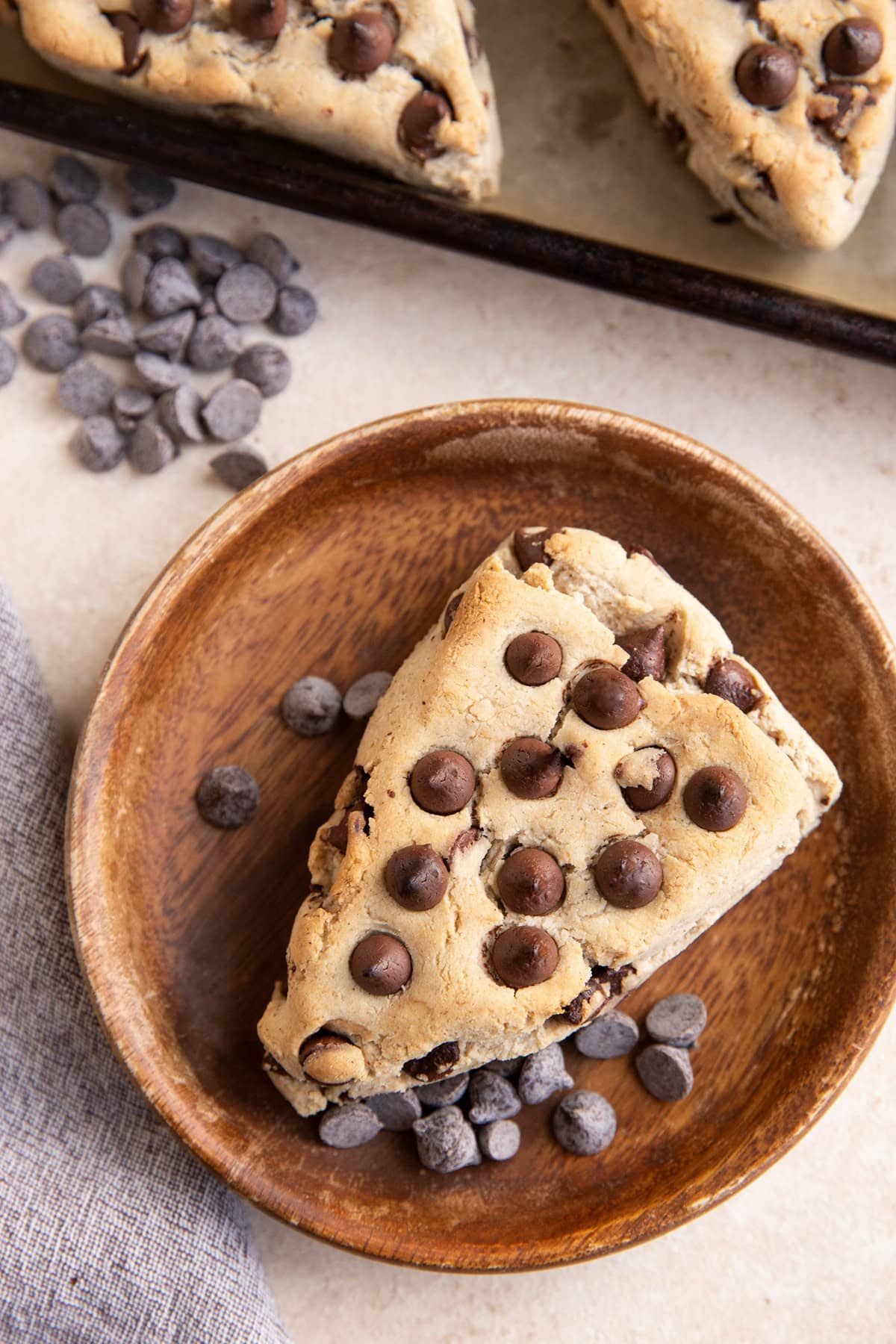
The next time you’re craving scones, whip up this cottage cheese version of classic scones!
If you love baking scones, try some of my other delights.
More Scone Recipes:
- Vegan Blueberry Scones
- Cranberry Orange Scones
- Almond Flour Lemon Poppy Seed Scones
- Raspberry Scones
Cottage Cheese Scones
Ingredients
- 2 ½ cups gluten-free all-purpose flour , or regular all-purpose flour
- ½ cup granulated sweetener of choice*
- 1 Tbsp baking powder
- 2 tsp ground cinnamon, optional
- ½ tsp sea salt
- 3/4 cup cottage cheese
- ½ cup avocado oil**
- 2 tsp pure vanilla extract
- 2-3 Tbsp water or milk
- ½ cup chocolate chips , or up to 1 cup of desired mix-ins
Optional Glaze:
- 1 cup powdered sugar
- 2 Tbsp milk or water
Instructions
- Preheat the oven to 375 degrees Fahrenheit and line a large baking sheet with parchment paper.
- Combine the gluten-free flour, sugar, baking powder, cinnamon, and sea salt in a mixing bowl and stir well to combine. Transfer the dry mixture to the bowl of a stand mixer fitted with the paddle attachment.
- Blend the cottage cheese, avocado oil, and pure vanilla extract in a blender and blend until the mixture is thick and smooth, resembling the consistency of sour cream.
- Transfer the wet mixture to the stand mixer and mix on low speed until the ingredients are combined. Then, increase the speed to medium-high speed and add 2 to 3 tablespoons of milk or water, until a thick dough forms. At first, the mixture will look very dry, but it will come together in a perfect scone dough after adding some liquid and beating thoroughly.
- Mix in the chocolate chips until combined.
- Form the dough into a large ball, then press it into a disc on the parchment-lined baking sheet. Use a sharp knife to cut the dough into 8 triangular sections. Space the triangles of dough over the baking sheet, giving them plenty of space. If you’d like, press extra chocolate chips into the tops of the dough.
- Bake on the center rack of the preheated oven for 18-22 minutes, or until the scones are golden brown.
- Allow the scones to cool for at least 10 minutes before enjoying.
- If you’d like, you can make an optional glaze by mixing one cup of powdered sugar with 2 tablespoons of milk or water. Until creamy. Drizzle the glaze over the scones and allow it to dry before serving.
Notes
Nutrition
Nutrition information is automatically calculated, so should only be used as an approximation.
Like this recipe? Rate and comment below!